Fear, Fury, and Five Bullets: Why Bernie Goetz' Story Still Haunts Us

I was 19 years old in 1984.
Old enough to ride the subway alone......if I lived in New York.
Old enough to understand fear.
Old enough to know that whose fear mattered—and whose didn’t—was never evenly distributed.
On December 22, 1984, Bernie Goetz, a 37-year-old white man, boarded a Manhattan subway train and shot four unarmed Black teenagers. They survived—but barely. One, Darrell Cabey, was left paralyzed and permanently brain-damaged. The shooting lasted only minutes. The consequences have lasted four decades.
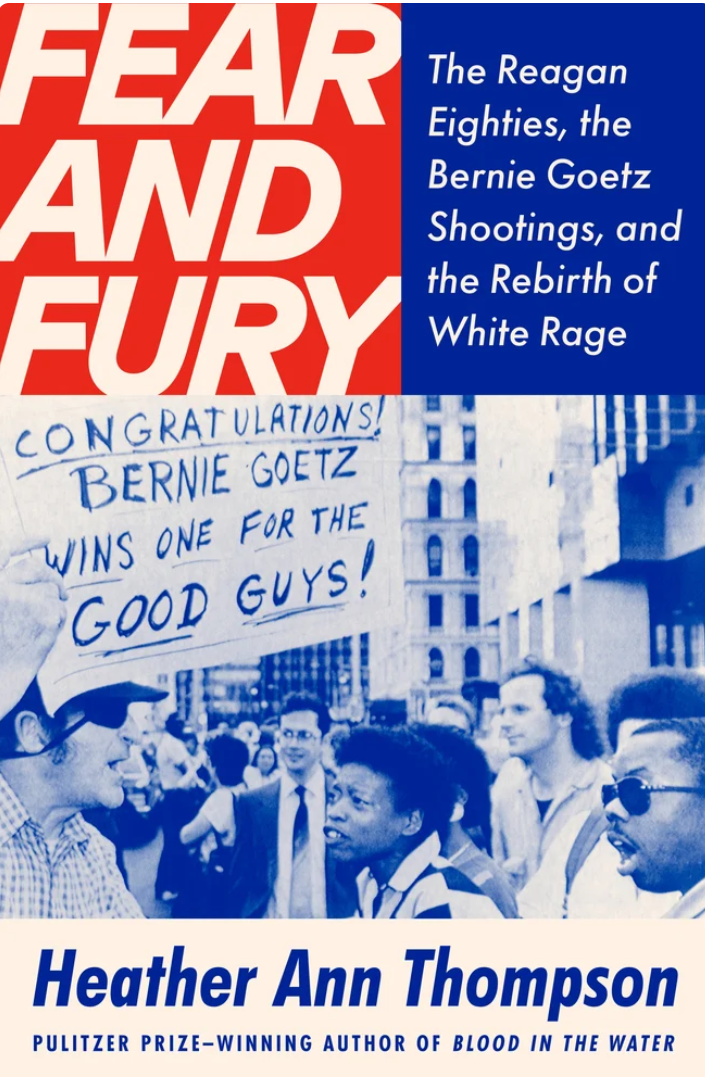
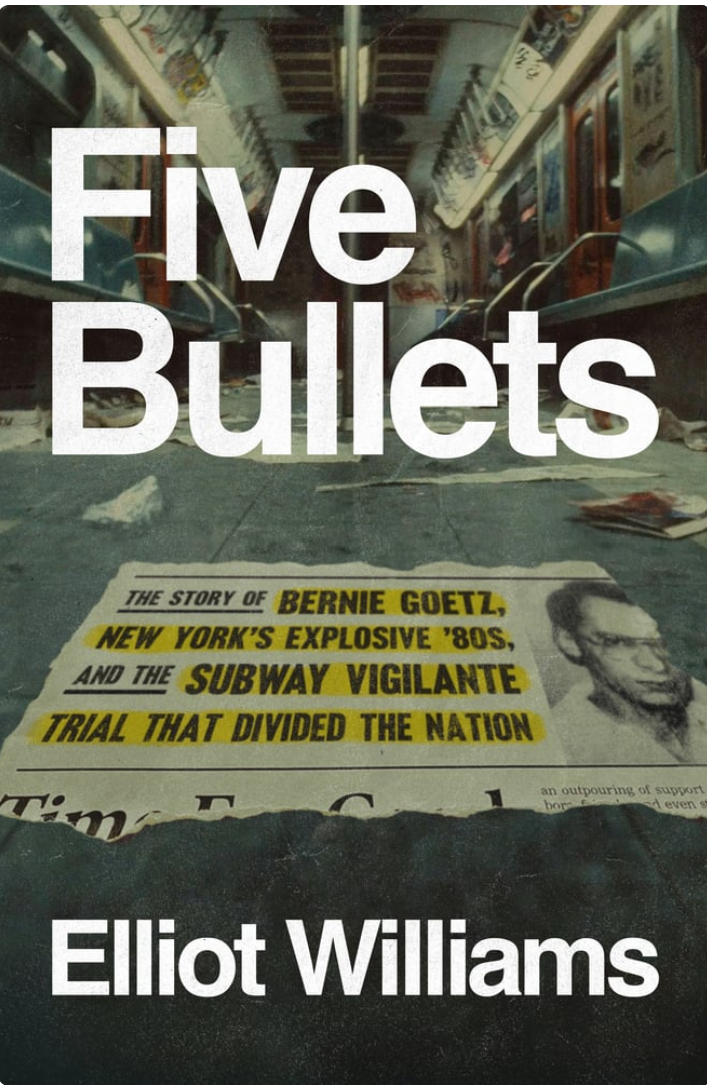
This month, two new books revisit that moment, and their timing could not be more urgent:
Together—and in sharp contrast—they ask us to confront a question America still refuses to answer honestly:
Who gets to claim fear as justification for violence?
The Shooting Everyone “Understood”—Until You Look Closer
The story many Americans remember is deceptively simple:
A white man, fed up with crime, defends himself on a dangerous subway.
The reality is not.
Four teenagers—Troy Canty, Barry Allen, James Ramseur, and Darrell Cabey—were traveling from the Bronx to a downtown arcade. Canty asked Goetz for five dollars. No weapon was displayed. Goetz carried an illegal gun loaded with hollow-point bullets.
He shot all four.
Then, seeing Cabey slumped but alive, Goetz fired again at point-blank range, later telling police:
"You don’t look too bad. Here’s another.”
Cabey whispered afterward:
“I didn’t do anything. He shot me for nothing.”
Those words echo through Heather Ann Thompson’s book like a refrain history never answered.
Two Books, Two Lenses—and One Uncomfortable Truth
📘 Five Bullets — Elliot Williams
Williams, a legal analyst, approaches the case through the courtroom: the charges, the jury, the technicalities that led to Goetz’s acquittal on attempted murder and his brief sentence for gun possession.
It’s meticulous. Procedural. Law-centered.
Williams ultimately argues that the verdict was legally defensible—while leaving the moral reckoning to the reader.
📕 Fear and Fury — Heather Ann Thompson
Thompson’s book is something else entirely.
A Pulitzer Prize–winning historian, she places the shooting inside the broader collapse of 1980s New York: austerity, racialized fear, tabloid outrage, and a political culture eager to turn a vigilante into a folk hero.
She names what many wouldn’t then—and still won’t now:
This wasn’t just fear. It was rage. White rage.
And it was rewarded.
Media, Myth, and the Making of a Vigilante Hero
In the days after the shooting, tabloids falsely claimed the teens had “sharpened screwdrivers.” Mainstream outlets repeated it. The victims were transformed into villains.
Goetz, meanwhile, became a symbol—praised, defended, excused.
His own words (“my intent was to kill”) were reframed as trauma. His violence rebranded as instinct. His fear elevated above the broken bodies left behind.
Darrell Cabey could not testify. His injuries were too severe.
His life disappeared from the headlines.
Why This Story Feels So Current in 2026
Nearly forty years later, Bernie Goetz—now in his late 70s—tells Elliot Williams that the teenagers “absolutely needed shooting.” No remorse. No reckoning.
And suddenly, the story doesn’t feel historical at all.
Both books draw direct lines from Goetz to modern vigilante cases—to the ways fear, race, and self-defense rhetoric continue to excuse irreversible harm.
Thompson goes further, warning that the same forces that celebrated Goetz now threaten American democracy itself.
But she ends not with Goetz.
She ends with Darrell Cabey and his mother—her arms resting on his shoulders.
A reminder of what was lost.
And who paid the price.
Why BookAHolics Should Read These Books
These aren’t just crime books.
They’re American books.
They challenge us to reread the past without nostalgia.
To question the stories we were told—and the ones we repeated.
To sit with discomfort instead of simplifying it.
If you care about:
history that still breathes,
books that interrogate power,
and stories that refuse to center the wrong hero,
these belong on your shelf.
📚 Add to Your Reading List
👉 Available now wherever books are sold.
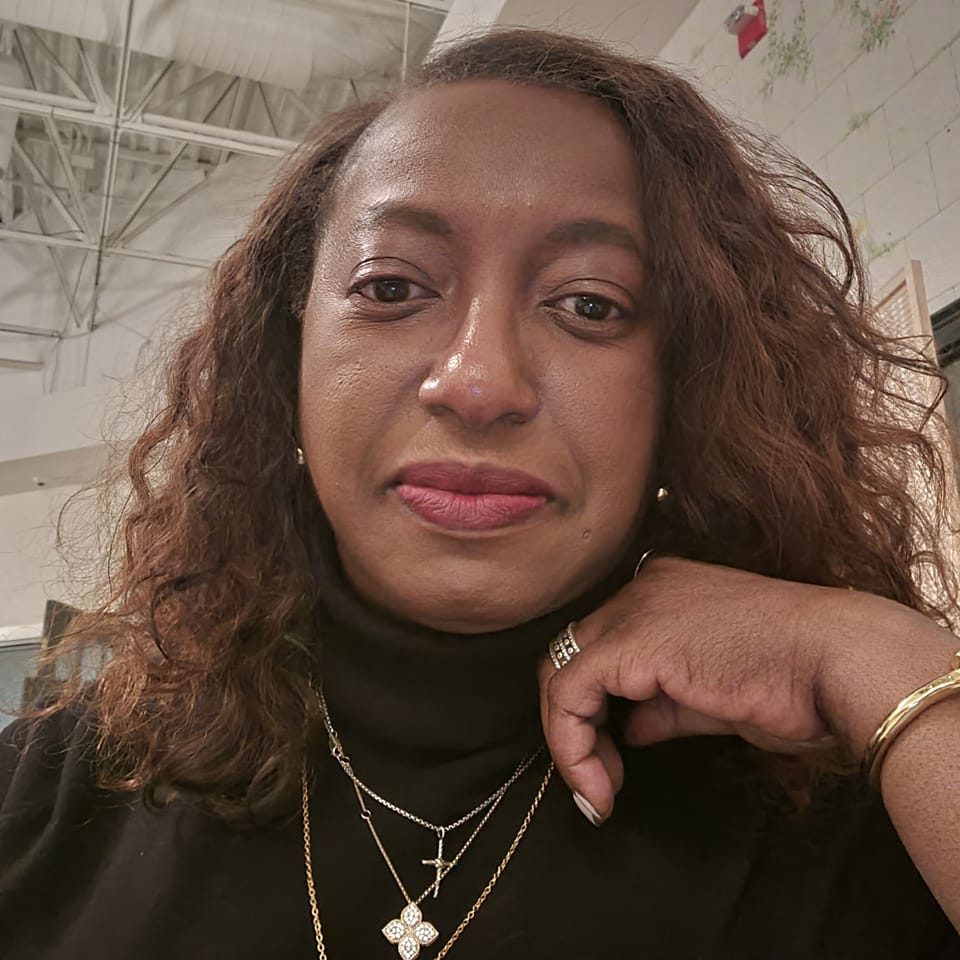
Deirdre is a UNC Tarheel superfan and a proud member of Alpha Kappa Alpha Sorority, Inc., The Links, Incorporated, an associate member, and past regional officer of Jack and Jill of America, and a board member of Friends of the Gaston County Public Library. She is also a community advocate, world traveler, luxury handbag fanatic, wife, and mother of two adult sons.