Why Self-Love Isn't Selfish: Lessons from Becoming a Peacock by Michal Bar-David
What does it really mean to know your worth?
It's a question that follows us through every stage of life. Whether you're a teenager navigating peer pressure, an adult facing career setbacks, or someone rebuilding after heartbreak, the struggle to believe you're enough is universal.
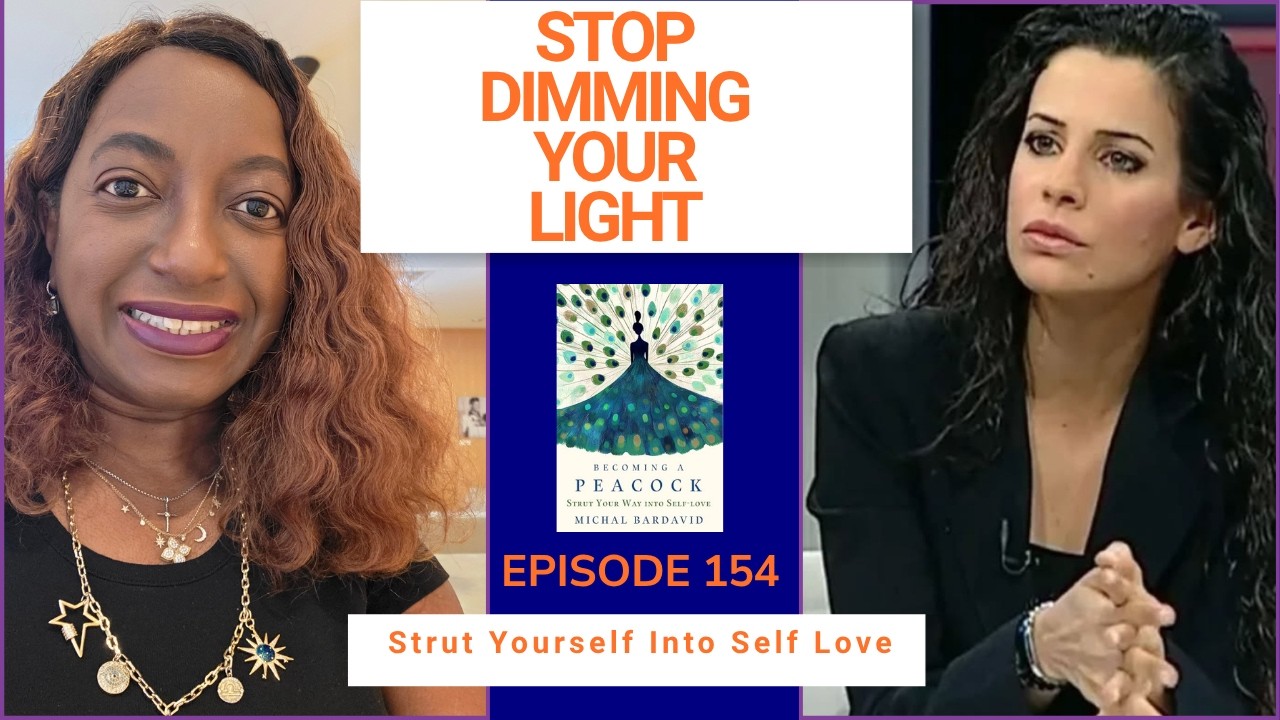
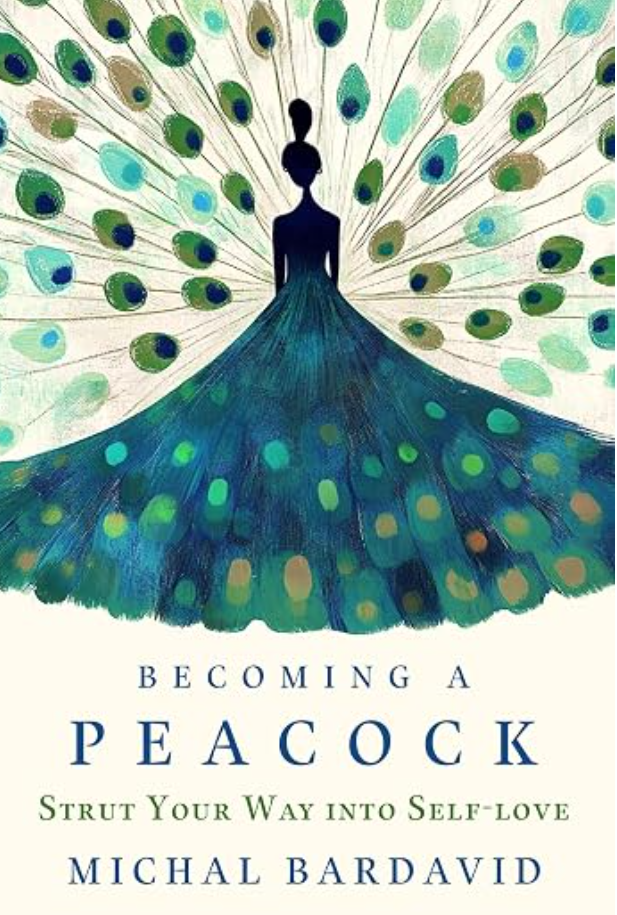
On a recent episode of The Bookaholic Podcast, I had the pleasure of speaking with Michal Bar-David, author of Becoming a Peacock: Strut Your Way into Self-Love. Our conversation wasn't just about a book—it was about learning to live with confidence, authenticity, and the courage to let your light shine.
Why a Peacock?
At first glance, a peacock seems like an unusual symbol for self-love.
But Michal explained it beautifully.
A peacock doesn't constantly display its magnificent feathers. Most of the time, it walks quietly and confidently. Yet when the moment comes, it spreads its feathers without apology.
That's the lesson.
You don't have to seek attention every moment of every day. But when it's your time to shine, don't shrink yourself to make others comfortable.
Know your value. Own your gifts. Then let the world see them.
Why Self-Love Matters More Than Ever
Michal has spent the past 17 years teaching dance movement therapy at a university in Istanbul. Through years of helping students understand boundaries, confidence, and emotional health, she noticed something remarkable.
Every issue eventually traced back to one thing:
Self-love.
Whether someone struggled with confidence, relationships, personal boundaries, or anxiety, the root issue often wasn't ability—it was believing they were worthy.
That's the foundation of her book.
When the World Tries to Dim Your Light
During our conversation, I shared a childhood memory that stayed with me for decades.
As a young student, my chorus teacher asked if anyone knew how to dance the Charleston. My parents had taught me, so I proudly volunteered.
Later, two classmates mocked me for speaking up.
That small moment planted a seed.
Many of us learn early that shining comes with criticism.
Maybe you've experienced it too.
-
At work.
-
In school.
-
In your family.
-
Even in church.
Sometimes people aren't uncomfortable because you're arrogant.
They're uncomfortable because you're confident.
Michal's response was powerful:
"You have to build such a strong sense of self that other people's opinions bounce off."
That strength doesn't appear overnight.
It comes from daily practice.
Daily reminders.
Daily choices to believe that your worth doesn't depend on someone else's approval.
Your Invisible Protective Bubble
One of the most fascinating concepts Michal discussed comes from dance movement therapy.
It's called the kinesphere—your personal space.
She encourages readers to imagine an invisible bubble surrounding them.
When criticism, jealousy, or negativity comes their way, it hits that protective space instead of penetrating their heart.
I loved this visual.
Imagine criticism bouncing away instead of becoming part of your identity.
That kind of emotional boundary changes everything.
What If Your Family Doesn't Support You?
One of the hardest parts of our conversation centered on children and teenagers who don't receive encouragement at home.
Many people assume confidence is destroyed by strangers.
Often, it's damaged by those closest to us.
Parents.
Siblings.
Family members.
Michal acknowledged how painful this reality can be.
But she also emphasized something incredibly hopeful.
As we grow older, we can learn to separate our own voice from the voices we inherited.
Just because someone repeatedly told you that you weren't enough doesn't make it true.
Their words are not facts.
Healing begins when we recognize which beliefs belong to us—and which ones never did.
Stop Tying Your Worth to Your Achievements
One of my favorite chapters in the book focuses on worthiness.
It's also one of the most important.
Too many people connect their value to things that can disappear:
-
A career
-
Money
-
Marriage
-
Physical appearance
-
Status
-
Recognition
When those things disappear, people often feel like they've disappeared too.
Michal explained that this is why rejection can feel so devastating.
We've attached our identity to something temporary.
Instead, she encourages readers to build an identity that exists before success—and remains after failure.
You are still worthy if you lose your job.
You are still worthy after a breakup.
You are still worthy if someone rejects you.
Your value was never dependent on those things.
Authenticity Is an Act of Self-Love
We also discussed authenticity in today's world.
Social media.
Artificial intelligence.
Filters.
Cosmetic enhancements.
Curated online lives.
There's nothing inherently wrong with changing your hairstyle, improving your appearance, or embracing technology.
The deeper question is:
Why are you doing it?
Are you expressing yourself?
Or hiding yourself?
Michal believes authenticity is one of the highest expressions of self-love.
When you're accepted for a version of yourself that isn't real, you'll never experience genuine peace.
Real confidence comes from being loved—and loving yourself—as you truly are.
The Power of Saying No
Perhaps one of the most practical lessons from the book is learning to say no.
For many people—especially women—that tiny two-letter word feels impossible.
We don't want to disappoint anyone.
We don't want to seem selfish.
We fear losing relationships.
Michal introduces the idea of a loving no.
A healthy "no" isn't harsh.
It's honest.
It's respectful.
It's clear.
When someone truly values you, they can accept your boundaries without withdrawing their love.
And if they can't?
Perhaps the relationship wasn't as healthy as you believed.
As Michal beautifully said,
"A no to someone else can be a yes to yourself."
A Book That Belongs Beside Your Bed
Becoming a Peacock isn't a book you'll read once and place on a shelf.
It's the kind of book you return to.
One chapter when you're doubting yourself.
Another after a difficult conversation.
Another when you're rebuilding your confidence.
It also pairs beautifully with journaling, counseling, coaching, or personal reflection.
In fact, during our conversation I suggested that guidance counselors, schools, and graduation programs should consider placing this book into the hands of young adults before they step into the next chapter of life.
The lessons inside aren't just for teenagers.
They're for every age.
Because every one of us occasionally forgets our worth.
Final Thoughts
Self-love isn't arrogance.
It isn't selfishness.
It isn't believing you're better than someone else.
It's simply recognizing that your value exists before your accomplishments, before your relationships, before your appearance, and before anyone else's opinion.
Like the peacock, you don't need to perform every day.
But when life calls you to spread your wings...
Don't apologize for shining.
Listen to the Full Conversation
If you'd like to hear the complete interview with Michal Bar-David and discover more insights from Becoming a Peacock: Strut Your Way into Self-Love, tune in to The Bookaholic Podcast, where we explore books that help us read more, know more, and be more.

Deirdre is a UNC Tarheel superfan and a proud member of Alpha Kappa Alpha Sorority, Inc., The Links, Incorporated, an associate member, and past regional officer of Jack and Jill of America, and a board member of Friends of the Gaston County Public Library. She is also a community advocate, world traveler, luxury handbag fanatic, wife, and mother of two adult sons.

Start With 4 Black Authors: Prize Winners Paired With Classics